• Skip to main content
SIGN UP
  • News
  • FAQ
  • 2025 Replay
  • Shop
  • Donate
SIGN UP

Dominican Rosary Pilgrimage

A National Pilgrimage Devoted to Christ and Our Lady

  • News
  • FAQ
  • 2025 Replay
  • Shop
  • Donate

Dominican Friars

Mar 11 2024

Are You a Eucharistic Soul?

Diversity is baked into reality. Rocks, plants, and animals adorn the world in a vast array of species. The existence of many things and many kinds of things displays the manifold and infinite perfections of the Creator. Just as this diversity exists in nature, so it exists in the order of the supernatural, that is, in the order of grace. Saint Paul teaches this point in his letter to the Ephesians: 

But grace was given to each of us according to the measure of Christ’s gift…and his gifts were that some should be apostles, some prophets, some evangelists, some pastors and teachers, to equip the saints for the work of ministry, for building up the body of Christ, until we all attain to the unity of the faith and of the knowledge of the Son of God, to mature manhood, to the measure of the stature of the fulness of Christ.

(Eph 4:7,11-13)

One particular grace that God gives to souls is a special love for the Eucharist. This special love goes beyond the ordinary love for the Blessed Sacrament to which God calls every Christian. This love is an extraordinary kind of love—a desire to be with Jesus, that is, to abide in his Presence and to share the thoughts and secrets of the heart, as one friend to another. Before he instituted the sacrament of his Presence under the veil of bread and wine, the Son of God first called men and women to intimate friendship with Himself as the Word made flesh.

One such recipient of this special love is Saint John, the beloved disciple. Jesus called John to a special vocation, the vocation to console his Sacred Heart with his friendship. The youngest of the apostles, John understood Jesus and consoled him with his loyal presence, faith, and confidence. It was John who rested his head close to the breast of Christ at the Last Supper, closely listening to his beloved teacher and friend. It was John who, when all the rest of the apostles had abandoned Jesus, remained with his friend at the Cross, offering his silent looks of faith, love, and trust. And it was this beloved friend of the Lord who, when unable to haul the miraculous catch of fish into the boat with Peter, recognized the resurrected Jesus on the shore of the Sea of Tiberias saying, “It is the Lord!” (John 21:7). This grace of intimate friendship between John and Jesus knew no bounds, such that when Jesus ascended to the Father and no longer could be seen in the flesh, John undoubtedly continued to keep company with His Lord and God, hidden now under the appearances of bread and wine. 

Jesus continues to give this same grace of intimate friendship today. He calls all souls to Himself, but there are some to whom Jesus offers the grace to be his close friends, much like Saint John. These close friends are those who feel drawn to keep company with Jesus, to abide in his presence, to console him with their friendship. These friends go to the Eucharist, the sacrament of Christ’s presence. They go to the Eucharist to find their master, their teacher, their Lord, their friend. There, these friends keep Jesus company, silently loving him. Perhaps we can call these close friends of Jesus “Eucharistic souls.” They are men and women in the Church of every time, kind, and place. Their value to the Church comes not from the diversity of their circumstances, but rather from the measure of Christ’s gift to them for the building up of the body of Christ.


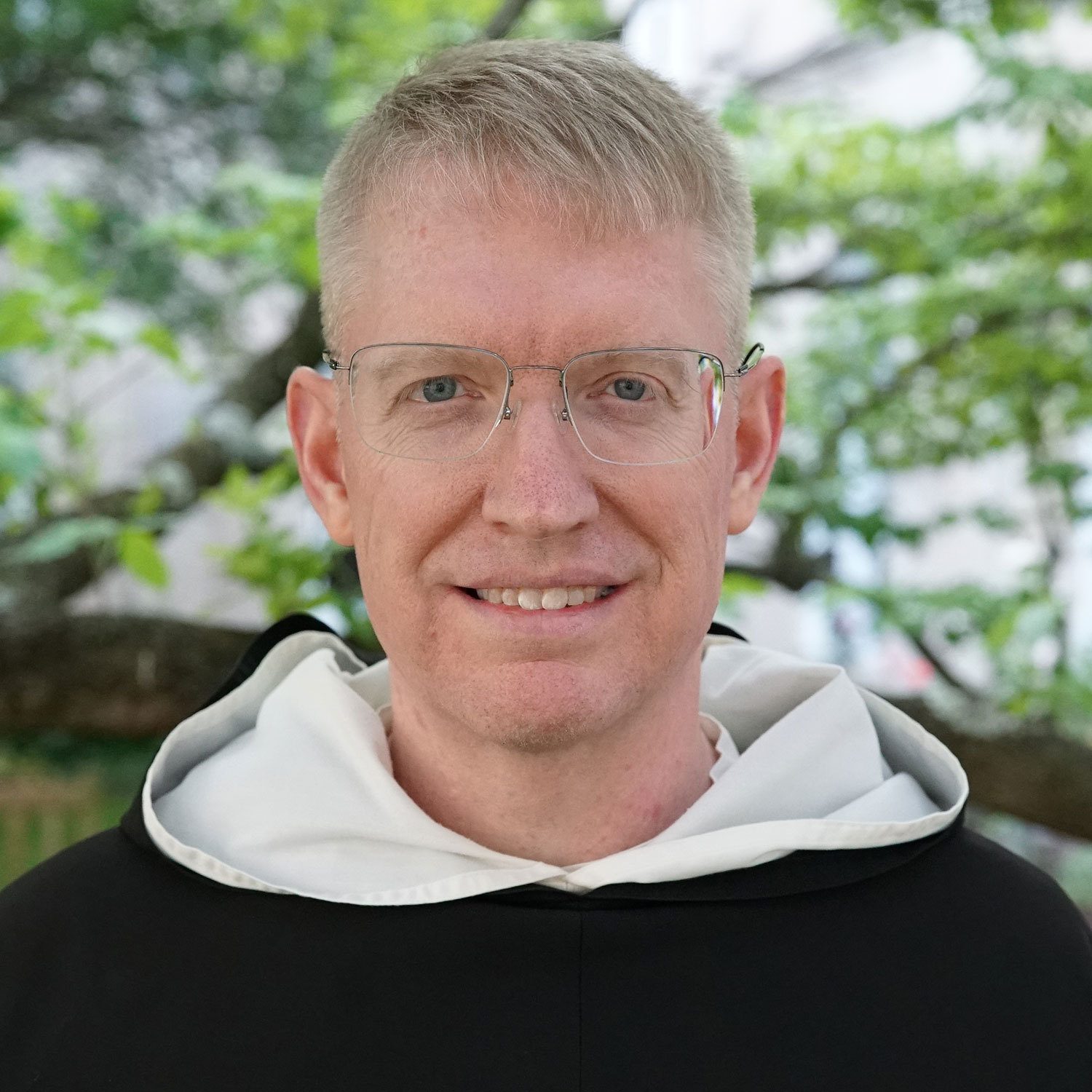
This article was originally published in the dominicanajournal.org and was written by Br. Raphael Arteaga, O.P..

Written by Dominican Friars · Categorized: Uncategorized · Tagged: Dominican Friars, Eucharist, PRAYER

Mar 04 2024

Seven Life-Hacks for Confession

  1.       Pray for the virtue of penance.

It might be helpful to think of penance as a counterpart to gratitude: just as we owe gratitude to God for the benefits He has given us, so too we owe God sorrow for the offenses we’ve committed against Him.  This reasonable sorrow about our sins is called the virtue of penance, and it is at the heart of the Sacrament of Penance.  The more deeply we are rooted in the virtue of penance, the more powerful our confessions will be.

  1.       Memorize an Act of Contrition.

Being contrite is essential to making a good confession.  Yes, simple versions of the Act of Contrition (like “Jesus Christ, have mercy on me, a sinner”) work perfectly well.  But the long versions can also educate us about what we are doing.  About 500 years ago the Church defined contrition as “a sorrow of mind, and a detestation for sin committed, with the purpose of not sinning for the future.”  A typical, full version of the Act of Contrition includes these three elements.  For instance, this version has the penitent say: “I detest my sins… I firmly resolve… to do penance, and to amend my life.”  If we know what we are asking for, we can more easily start to instantiate the characteristics of contrition in our lives.

  1.       Examine your conscience with the virtues.

When I first learned to go to Confession, I was taught to examine my conscience by using the Ten Commandments.  This is very good.  But there are other ways to do this.  For instance, one could examine one’s conscience with reference to the virtues.  The cardinal virtues (prudence, justice, fortitude, and temperance) and the theological virtues (faith, hope, and love) are the basic blueprint for living a happy life—and by seeing how we fail in these, we can also offer ourselves back to God.  Someone who was ambitious could even read over the Catechism passages linked above to launch a self-reflection.

  1.       Pray before Confession.

One introduction which the priest may pray over you, before you begin your confession, says: “May the grace of the Holy Spirit fill your heart with light, that you may confess your sins with loving trust, and come to know that God is merciful.”  I like this prayer, especially its focus on asking for light for our minds to know our sins, and trust in God’s mercy—two good things to ask for before Confession.

  1.       Renew your sorrow for sins of your past life.

One possible way to finish one’s confession is with these words: “I am sorry for these sins, and all the sins of my past life.”  The purpose isn’t to ask for the forgiveness of these sins of one’s “past life”—they’ve already been forgiven definitively by penance—but to root ourselves more deeply in the virtue of penance. One can even add: “for the sins of my past life, especially [of this sort].”  This acknowledges both our continuing need for being healed more deeply from our sins and tendency to sin, and the objective power of the sacrament to convey this to us.

  1.       Fulfill your penance attentively.

When we get a penance, its effectiveness isn’t just like a private prayer of ours.  Rather, it shares in the objective power that Christ gives to the sacraments.  This means that the penance—even a small one— can be much more powerful than even a favorite devotion of our own choosing.  In this sense, a penance isn’t only a punishment, but also a gift.

  1.       Go.

All of the good effects of the Sacrament of Penance can only take effect, if you actually go.

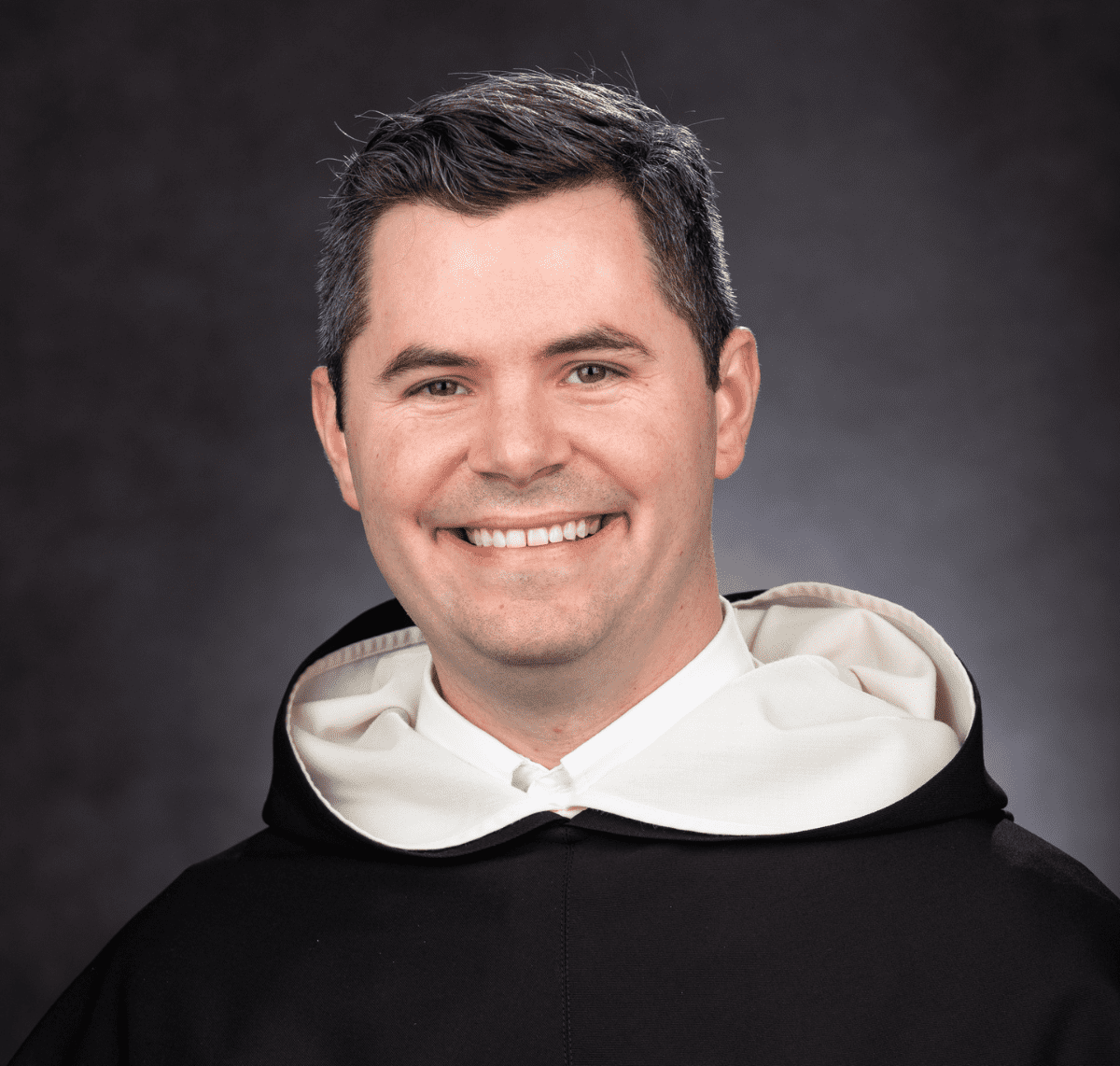
This article was originally published on dominicanajournal.org and was written by Fr. John Sica, O.P.

Written by Dominican Friars · Categorized: Uncategorized · Tagged: Confession, Dominican Friars, Lent, Order of Preachers

Feb 28 2024

4 Ways St. Joseph Can Help You This Year

The saints are like good friends—their examples inspire us, and they actually help us in our difficulties. When Pope Francis announced the Year of St. Joseph, he pointed us to one of the best role models and intercessors. St. Teresa of Avila once said, “I don’t recall up to this day ever having petitioned him for anything that he failed to grant.” So, here are a few ways St. Joseph can help us this year.

1) Fear & Sickness

With the Covid-19 pandemic raging, we’re surrounded by sickness and fear. St. Joseph knew something about both. After the joy of Christmas, an angel warned him, “Rise, take the child and his mother, and flee to Egypt, and remain there till I tell you; for Herod is about to search for the child, to destroy him” (Matt 2:13). With alarm bells ringing, Joseph kept calm. Because he knew how dearly God loved them, he didn’t let fear control him. He took all the necessary precautions, but he knew God was in control. 

When illness finally came, Joseph had Jesus and Mary by his side; their love never abandoned him when he was isolated from everyone else. 

In the Litany of St. Joseph, we pray to him as Solace of the wretched, Hope of the sick, Patron of the dying, and Terror of demons. In our fear and isolation, he can comfort us, stir up our hope, prepare us for heaven, and chase away the demons that terrorize us.

2) Silence & Peace

Joseph didn’t talk very much—at least, we don’t have any of his words. In his book, Joseph the Silent, Michel Gasnier comments that Joseph’s “only pride then lay in fulfilling God’s designs, quietly, peacefully, so silently that the Evangelist can give us no word of his. In all the strange situations in which God placed him, he remained calm and silent” (Gasnier, 183). 

Saying that 2020-2021 has had its “strange situations” is a massive understatement. All the noise and drama around us—flashing news reports and raucous political disturbances—upset our interior tranquility. We can take our cue from Joseph and dial down the exterior noise. Turning off the TV, taking out the earbuds, and putting down the phone, we can ask Joseph to bring us peace. Then, in the quiet, we might hear God saying “Peace I leave with you; my peace I give to you” (Jn 14:27).

3) Openness to God

Because silence and peace reigned in Joseph’s heart, he was open to God’s direction in his life. We don’t know what Joseph was planning for his life, but it’s a sure bet he didn’t think that it would include marrying the Mother of God and raising the Son of God. But, he happily accepted the unexpected mission to care for Jesus and Mary (Matt 1:18–25). 

Joseph lived the words, “Thy will be done” from the Lord’s Prayer. He “did not know where God would lead him; it was enough that God knew” (182). That attitude of obedience brought Joseph the greatest happiness—it gave him Mary and Jesus as his family. 

Joseph, most obedient, pray for us so that we might place our whole lives in God’s hands and trust in his will, which is always for our good.

4) True Greatness

Open to God and obedient, we’ll do great things, but great things like Joseph did. In our culture, many people dream of making it big in Hollywood or New York, becoming famous, or distinguished. Or, sometimes, people just want to go viral. Whether it’s that tweet or tik-tok, we crave the exhilaration of celebrity. 

Joseph teaches us that true greatness doesn’t look like that. True greatness isn’t always flashy. Sometimes, it is hidden. Greatness is forged in the daily grind of loving and serving God and neighbor. 

Joseph never went viral. In their earthly lives, Jesus and Mary got all the attention. And that is just how Joseph wanted it. He knew that greatness doesn’t mean clawing your way to the top. Hidden yet faithful, silent yet consistent, Joseph provided a home for Mary and Jesus, protecting them and providing for them. It might not have been showy, but it set the stage for the redemption of the world. 

Gasnier gets at the core of Joseph’s greatness: “And his final word is that the essential thing is not to appear, but to be; not to bear a title, but to serve” (186). In an age of Instas and Finstas with facades and fake personas, Joseph can help us avoid trying to appear great and seek instead to actually be great.

Spouse of the Mother of God, Foster father of the Son of God, Diligent protector of Christ, pray for us!

✠

Photo by Fr. Lawrence Lew, O.P. (used with permission)

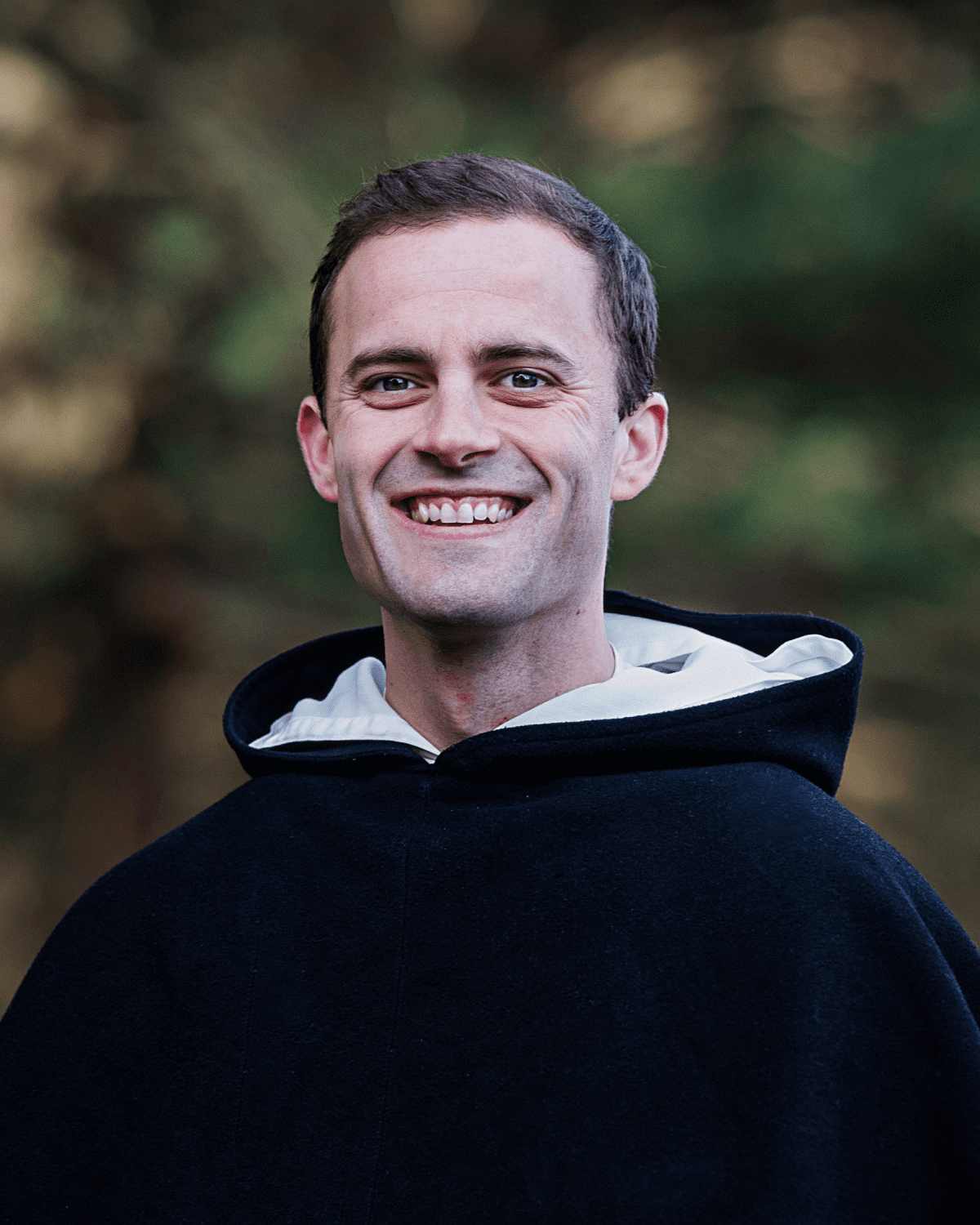
This article was originally published on dominicanajournal.org and was written by Fr. Damian Day, O.P..

Written by Dominican Friars · Categorized: Uncategorized

Feb 19 2024

Dominican Friars launch new podcast, Contemplata, with Fr. James Brent, O.P.

The Dominican Friars of the Province of St. Joseph are launching a new podcast, Contemplata, A Podcast for Contemplative Souls, with Fr. James Dominic Brent, O.P.. It was an idea that came to Fr. Brent several years ago during the Christmas Octave. “It simply dawned on me that God wants to raise up contemplative souls in the Church—people who have truly heard and take seriously the universal call to contemplative prayer.” That epiphany was confirmed a few months later when he gave a talk on this topic through the lens of St. Elizabeth of the Trinity. People were hungry for more on contemplative prayer.

Fr. Brent notes that Fr. Donald Haggerty has proposed there is a “contemplative revolution” underway right now in the Church, and points to the popularity of the writings of Fathers Thomas Dubay, Jacques Phillippe, and Timothy Gallagher as evidence of this deep hunger for prayer. “In a world of scientism, the human heart still thirsts for a drink from the fountain of Light on high,” said Fr. Brent.

The term “contemplata” is at the heart of our Dominican life and mission of preaching, he said. “Our motto is ‘contemplata aliis tradere’ – normally translated as ‘to give to others the fruits of contemplation.’ Contemplata are things contemplated deeply, the mysteries of God pondered with love and understanding in divine light, and are now ready to be put into words for others to receive.” 

The purpose of this podcast is to provide food for contemplative souls. But it means, first, letting people know there is a universal call to contemplative prayer.  Once they hear the call, people need practical instruction on how to proceed. “They need to learn the pathways to the top of Mount Tabor, so to speak, so that by walking them they might come to behold the radiant face of Christ with the eyes of their hearts.” Second, people need actual food for meditation and prayer. “People need to hear the mysteries of faith all over again, and hear them more deeply than on the level of catechetics or common homilies, and hear them in a manner suitable to contemplative prayer.”

Contemplata, A Podcast for Contemplative Souls will launch March 7. You can watch on Dominican Friars Media at dominicanfriars.org/contemplata or listen wherever you get your podcasts.

Written by Dominican Friars · Categorized: Uncategorized

Feb 13 2024

What Are You Wearing This Lent?

Today is the first of many Fridays during Lent. Our penances are perhaps being refined and hopefully refining us as well. I would like to propose another aspect of penance, focusing more exteriorly. Have you thought much about the clothes you wear during Lent? Likely not, but it may be more worthwhile than you think. By way of example, Saint Dominic demonstrates the value of religious garb in penitential exercises and, by extension, any apparel worn for religious purposes.

There are numerous testimonies to Dominic’s sanctity, which manifested itself in various forms: never sleeping on a bed (if he even slept), drastically diluting his wine at table, praying through the night, fasting, etc. These details are reported by many witnesses, but there is another detail that is repeatedly mentioned: his religious habit. It was an uncomfortable outfit, which he always slept in. Part of Dominic’s penitential life, which was so salutary for himself and many souls, was his attention to his clothing. By no means did he admit of any disordered concern for his appearance—his habit was reported to be rather tattered. But his clothing was an important part of his austerity because it was both a sign for others and for himself.

Today, the purpose of a religious habit is often defended with only one of these elements in mind: it is a sign to others of our separation from the world and our consecration to God. But we, even religious, often forget the secondary element of the habit: it is a sign for the religious himself. Wearing the habit can be a penitential source of discomfort—both physically and socially. The habit doesn’t breathe well. It is mocked by a world that rejects consecration and its signs. But when these kinds of discomfort quite literally weigh upon his shoulders, the religious is challenged by his habit to remember: “I still belong to the Lord. I have stretched out my hands and been dressed by someone else, and now I must continually be converted to him in my consecration.”

Wearing the religious habit more continuously and intentionally can thus be a significant aspect of a consecrated person’s Lenten practices. But what about everyone else? I suggest that even non-religious men and women can follow the example of St. Dominic. Perhaps you can consider modifying the way you dress during this Lenten season. This is not to say that you should wear sackcloth and ashes to draw undue attention to yourself. But just as the religious wears the habit to remind him of his consecration, so you can use your clothing to remind yourself that you have put on Christ in baptism. 

This Lent, let your clothing be a small penance that turns you away from the things of this world toward Christ crucified. At least for a season, reject what is vain and showy, and instead clothe yourself with a sign of Christ’s humble simplicity. If this sounds daunting, begin by carrying a sign perhaps no one else will see—whether a crucifix, a medal, or a rosary in your pocket—that reminds you alone of your conversion to Christ. By God’s grace, your external appearance will give way to the more noble clothing of the heart, and you will say with the prophet Isaiah: 

I will rejoice heartily in the Lord,
   my being exults in my God;
For he has clothed me with garments of salvation,
    and wrapped me in a robe of justice,
Like a bridegroom adorned with a diadem,
    as a bride adorns herself with her jewels.


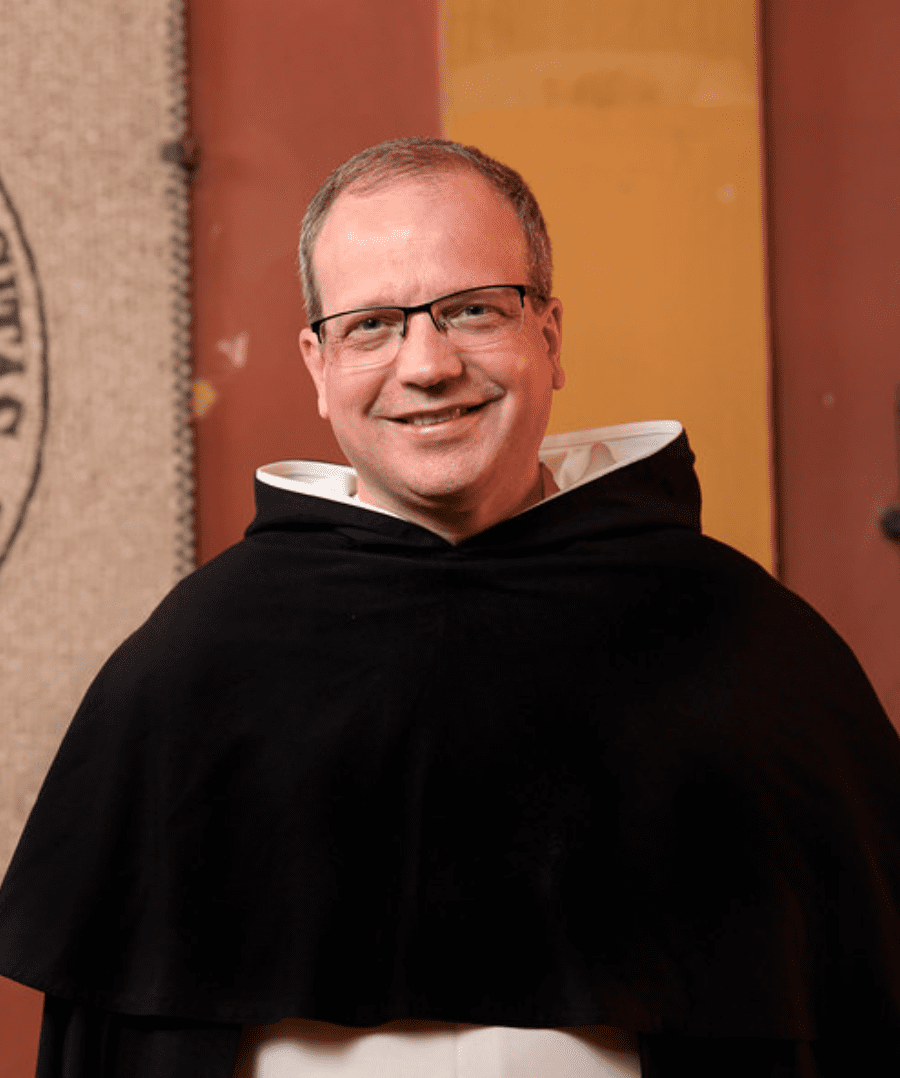
This article was originally published on dominicanajournal.org and was written by Br. Bertrand Hebert, O.P..

Written by Dominican Friars · Categorized: Uncategorized · Tagged: Dominican Friars, Lent

  • « Go to Previous Page
  • Page 1
  • Interim pages omitted …
  • Page 13
  • Page 14
  • Page 15
  • Page 16
  • Page 17
  • Interim pages omitted …
  • Page 24
  • Go to Next Page »

Contact Us:

Dominican Rosary Pilgrimage
141 East 65th Street
New York, NY 10065

Tel: (212) 744-2410
info@rosarypilgrimage.org

Media Inquiries: Kevin Wandra
Tel: (404) 788-1276
KWandra@
CarmelCommunications.com
PRESS RESOURCES
The Dominican Rosary Pilgrimage is hosted by the Dominican Friars of the Province of St. Joseph at the Basilica of the National Shrine of the Immaculate Conception and promotes the Confraternity of the Most Holy Rosary.

This event is supported by the Dominican Foundation of Dominican Friars Province of St. Joseph, Inc. a NY State tax-exempt corporation under section 501(c) (3) of the Internal Revenue Code, with tax ID # 26-3273636.

Privacy Policy | Copyright ©2026 Dominican Rosary Pilgrimage
Designed by Fuzati

Primary Logo Color

"*" indicates required fields

¿Planea asistir a la Peregrinación en persona?*
Ingrese un número del 0 al 2000.

Primary Logo Color

"*" indicates required fields

Are you planning to attend the Pilgrimage in person?*
Are you a member of your parish or ministry's leadership team?*
Please enter a number from 0 to 2000.