• Skip to main content
SIGN UP
  • News
  • FAQ
  • 2025 Replay
  • Shop
  • Donate
SIGN UP

Dominican Rosary Pilgrimage

A National Pilgrimage Devoted to Christ and Our Lady

  • News
  • FAQ
  • 2025 Replay
  • Shop
  • Donate

Uncategorized

Jun 23 2025

Fr. Austin Litke, O.P., Announced as 2025 Dominican Rosary Pilgrimage Principal Preacher

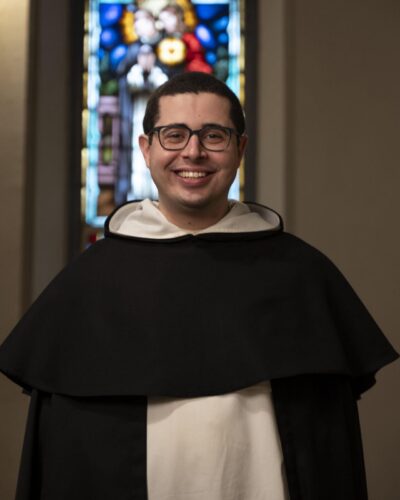
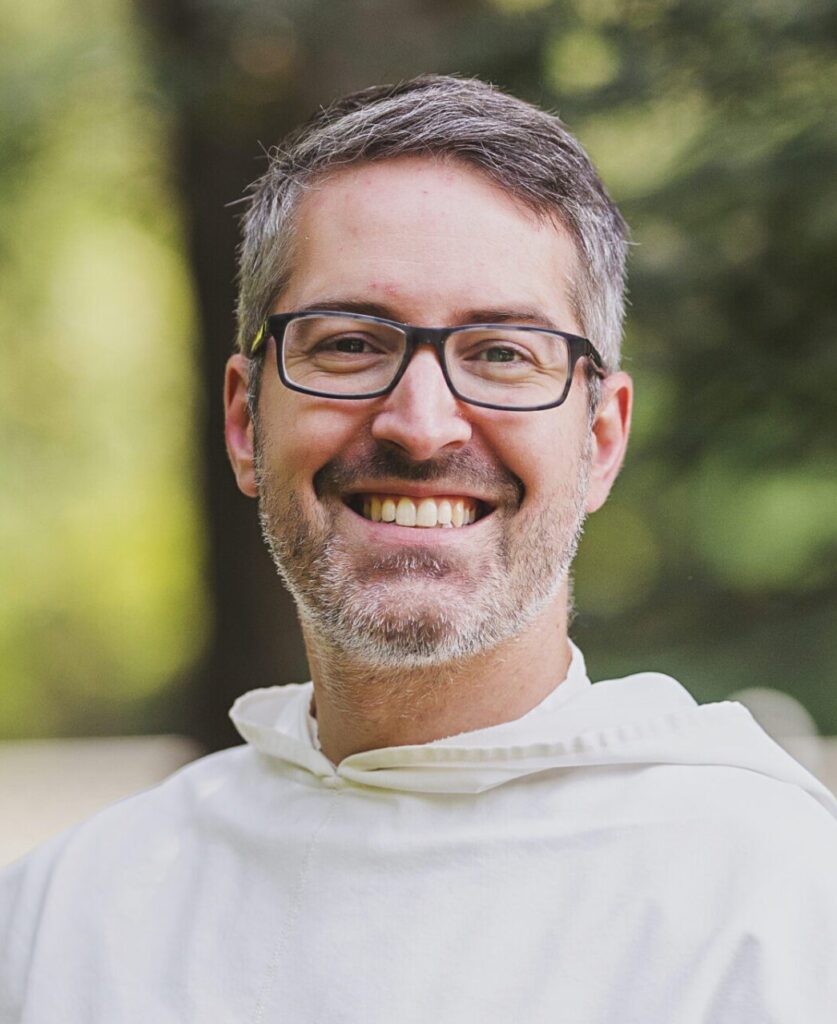
The Dominican Rosary Pilgrimage is pleased to announce that Fr. Austin Dominic Litke, O.P., will serve as the principal preacher for the 2025 pilgrimage on Saturday, September 27, at the Basilica of the National Shrine of the Immaculate Conception in Washington, D.C. Fr. Austin is the Promoter of the Holy Rosary for the Dominican Province of St. Joseph and a Dominican friar with a background in pastoral ministry and theological scholarship.

About Fr. Austin Litke, O.P.

Ordained a priest in 2011, Fr. Austin has served as a chaplain at Memorial Sloan Kettering Cancer Hospital and at New York University. He earned a doctorate in Patristic Theology from the Pontifical Patristics Institute in Rome and has taught at both the Pontifical University of St. Thomas Aquinas (the Angelicum) and the Dominican House of Studies in Washington, DC.

He currently teaches in the Department of Catholic Studies at the University of St. Thomas in St. Paul, Minnesota. This fall, he will return to Rome to begin a new assignment teaching at the Angelicum. Fr. Austin is also a member of The Hillbilly Thomists.

Join Us for the 2025 Dominican Rosary Pilgrimage

Now entering its third year, the Dominican Rosary Pilgrimage draws pilgrims from across the country for a full day of prayer, preaching, Eucharistic adoration, Confession, and the Holy Sacrifice of the Mass. In 2024, over 300 pilgrims were enrolled in the Rosary Confraternity, and the Basilica resounded with thousands praying the Rosary together.

We invite you to mark your calendars for Saturday, September 27, 2025, and join us at the Basilica in Washington, DC.

More details to come—including the official schedule.

Written by Dominican Friars · Categorized: Uncategorized · Tagged: Dominican Friars, Rosary

Jun 06 2025

The Rosary’s Essential Element: Contemplation

By Br. Jerome Masters, O.P.

In the decades following the Second Vatican Council, Venerable Patrick Peyton wanted to increase devotion to the Blessed Virgin Mary. To foster this devotion, he would lead Family Rosary Crusades where he coined the phrase: “The family that prays together stays together.” Eventually, in 1971, he wrote a letter to Pope Saint Paul VI asking the Rosary to be elevated to a liturgical prayer like the Liturgy of the Hours. Many similar requests that were received by the Holy See prompted Paul VI to promulgate the Apostolic Exhortation Marialis Cultus (On Devotion to the Blessed Virgin Mary) which was issued on February 2, 1974, on the Feast of the Presentation of the Lord.

The Church’s devotion to the Blessed Virgin is an intrinsic element of Christian worship.”

– Pope Saint Paul VI, Marialis Cultus

This Apostolic Exhortation is split into three sections: the liturgy and devotion to the Blessed Virgin Mary, the renewal of devotion to Mary, and reflections on the Angelus and the Rosary. In his reflection on the Rosary, Paul VI reminds us that the Rosary is “the compendium of the entire Gospel.” It is a “Gospel prayer” with a rich history that the popes have written numerous times such as Pope Saint Pius V, who “established the traditional form of the Rosary.” According to Paul VI, the Rosary makes us oriented to Christ, by its structure. “The litany-like succession of Hail Mary’s becomes in itself an unceasing praise of Christ…” In the Hail Mary, we call to mind the Savior of the world who is the fruit of Mary’s womb. Paul VI suggests that the name of Jesus was inserted into the Hail Mary to “help contemplation and to make the mind and the voice act in unison.”

Many will argue that the Rosary is not a commandment of God, nor is it found anywhere in Scripture. Why then pray the Rosary when you can go to God directly? Paul VI provides a good response to this argument both from the Rosary being a “Gospel prayer” (as stated above), but he also discusses, what he calls, the “essential element in the Rosary.” Contemplation. The Rosary without contemplation is “a body without a soul, and its recitation is in danger of becoming a mechanical repetition of formulas and of going counter to the warning of Christ: ‘And in praying do not heap up empty phrases as the Gentiles do; for they think that they will be heard for their many words’ (Mt. 6:7).” By its nature the Rosary invites us, through the intercession of Our Lady, to contemplate the mysteries of Christ’s life. Starting with the angelic greeting of Gabriel to Mary to the Nativity of the Lord, to his public ministry, to his sufferings in the last days of his earthly life, to finally “the glory of the Risen Lord which fills the Church.” Paul VI beautifully says that “this contemplation by its very nature encourages practical reflection and provides stimulating norms for living.”

Paul VI invites us into three ways the Rosary could be recited. The first is private where there is an “intimate recollection with the Lord.” The second is in community, whether that be among family or in groups, “to ensure the special presence of the Lord.” The third is publicly where “the ecclesial community is invited.” Paul VI gives special consideration to the second way, specifically the Family Rosary. He says that after the Liturgy of the Hours “the Rosary should be considered as one of the best and most efficacious prayers in common that the Christian family is invited to recite.” As the Second Vatican Council calls the family “the domestic church” so Paul VI invites all families, as Patrick Peyton did, to pray the Rosary as a family. “Families which want to live in full measure of the vocation and spirituality proper to the Christian family must therefore devote all their energies to overcoming the pressures that hinder family gatherings and prayer in common.”

Although Pope Saint Paul VI did not give Venerable Patrick Peyton exactly what he asked for in making the Rosary a liturgical prayer, he provided a wonderful reflection on how “the Church’s devotion to the Blessed Virgin is an intrinsic element of Christian worship.” Because she points us to her son, who is both her savior and our savior. I recommend reading Marialis Cultus in its entirety and reflecting on how your devotion to the Blessed Virgin Mary has led you to Christ through her intercession.

Photo by Fr. Lawerence Lew, O.P. (used with permission)

Written by Dominican Friars · Categorized: Uncategorized

May 29 2025

A Pilgrimage of Prayer: Join Us for the 2025 Dominican Rosary Pilgrimage

On Saturday, September 27, 2025, the Dominican Friars of the Province of St. Joseph will host the third annual Dominican Rosary Pilgrimage at the Basilica of the National Shrine of the Immaculate Conception in Washington, D.C. Last year, more than 3,000 pilgrims came together for prayer, adoration, confession, the Rosary, and Mass. This year promises to be another day of grace as we gather to honor Our Lady and draw closer to Christ through her intercession.

If you cannot attend in person, you can still take part through the full-day livestream. Many choose to host watch parties, gather their parish communities, or join quietly from home, uniting in prayer with pilgrims from across the country.

The pilgrimage will feature preaching and celebration from Dominican friars deeply rooted in the Order’s tradition of prayer and study. Fr. Austin Dominic Litke, O.P. will serve as the principal preacher, Fr. Joseph-Anthony Kress, O.P. as main celebrant, Fr. Andrew Hofer, O.P. as homilist, and Fr. Josémaría Guzmán-Domínguez, O.P. will offer Spanish-language preaching.

The day will close with joy as the Hillbilly Thomists take the stage for a free concert at 7:00 p.m. on the Catholic University Mall. With their blend of bluegrass and Gospel hope, their music has become a fitting celebration to end the pilgrimage in fellowship and song.

Whether you join us in Washington or online, we invite you to set aside this day for prayer, renewal, and encounter with Christ through His Mother.

Come, and let the Rosary lead you to the heart of Christ.


Written by Dominican Friars · Categorized: Uncategorized

May 12 2025

Pope Leo XIV Echoes Our Lady of Fatima’s Call to Pray for Peace

“Peace be with you!” 

A few days ago, from the central balcony of St. Peter’s Basilica, the Successor of St. Peter addressed a broken and fragmented world with the words of the Risen Christ: “Peace be with you!” It was an extraordinary moment that filled many hearts with a profound sense of Christian hope and joy.

At the conclusion of his prepared remarks, Pope Leo XIV invited the faithful to join him in the recitation of a Hail Mary. He asked everyone in attendance, as well as the many millions watching by livestream, to pray for his newfound ministry and, perhaps most importantly, to pray for peace throughout the world.

Our Mother Mary always wants to walk at our side, to remain close to us, to help us with her intercession and her love. So, I would like to pray together with you. Let us pray together for this new mission, for the whole Church, for peace in the world, and let us ask Mary, our Mother, for this special grace.

My friends, Pope Leo XIV is quite right. We must pray for peace. Prayer is almost always the first means for acquiring divine assistance (cf. Ps 69:2). It is the certain and indispensable key to opening the treasury of heaven and bending the ear of the eternal Father (cf. Jn 16:23). If we do not pray, especially in times of need, the treasury of heaven risks being unopened and the graces that God designs to give, squandered forever. Today, in a world marked by senseless suffering and seemingly endless war, we have such need for prayer, and in particular, prayers for peace.

On this glorious feast of Our Lady of Fatima, we recall how Mary taught the shepherd children (Lucia, Jacinta, and Francisco) to say the Holy Rosary for peace and an end to the First World War. 

Over the course of her apparitions in Fatima, Portugal, Our Lady asked the children to pray the Holy Rosary specifically for peace, not once, but at least three times! On May 13, 1917—Our Lady requested that the children “[s]ay the Rosary every day to obtain peace for the world and the end of the war.” Four months later, she repeated the same charge, saying, “Continue to [pray] the Rosary to bring about the end of the War.” Finally, on October 13, 1917, she enjoined them a third time, adding, “I am the Lady of the Rosary. Continue to say the Rosary every day. The war is going to end, and the soldiers will soon return to their homes.”

In so doing, Our Lady conveyed the splendid and even privileged place of the Holy Rosary in the communication of divine grace. But even more marvelously, she reminded the world about Rosary’s special relationship to the gift of peace. In Rosarium Virginis Mariae, Leo’s saintly predecessor, Pope John Paul II, wrote of this relationship:

A number of historical circumstances […] make a revival of the Rosary quite timely. First of all, the need to implore from God the gift of peace. The Rosary has many times been proposed by my predecessors and myself as a prayer of peace. At the start of a millennium which began with the terrifying attacks of 11 September 2001, a millennium which witnesses every day innumerous parts of the world fresh scenes of bloodshed and violence, to rediscover the Rosary means to immerse oneself in contemplation of the mystery of Christ who “is our peace,” since he made “the two of us one, and broke down the dividing wall of hostility (Eph 2:14). Consequently, one cannot recite the Rosary without feeling caught up in a clear commitment to advancing peace, especially in the land of Jesus, still so sorely afflicted and so close to the heart of every Christian. (14)

As good sons and daughters of the Church Universal, let us heed the invitation of Our Lady of Fatima, Pope St. John Paul II, and now Pope Leo XIV, and pray for peace throughout the world. Let us pick up our rosaries and tell our beads with renewed fervor, asking Mary, our Mother, to intercede for every nation under God, bringing them (one and all!) the Risen Lord’s gift of peace.

Through the power and efficacy of the Holy Rosary, may we become true channels of Christ’s peace.

Our Lady of Fatima, pray for us!

Fr. Maximilian Maria Jaskowak, O.P.

Written by Fr. Maximilian Maria Jaskowak, O.P.
Fr. Maximilian Maria Jaskowak, O.P., is a Catholic priest and Dominican friar of the Order of Friars Preachers (Eastern Province, USA). He currently serves as instructor of moral theology and Director of Spiritual Life Programs at St. Mary’s Seminary & University in Baltimore, MD. In addition to his teaching and mentoring responsibilities at the seminary, Fr. Maximilian is one of the directors and co-founders of the COR IESU Project, a new preaching initiative of the Dominican Province of St. Joseph, dedicated to the work of priestly formation.

Written by Dominican Friars · Categorized: Uncategorized

May 08 2025

The Power of the Rosary: How Our Lady of Fatima Teaches Us to Pray

Prayer is often the first means for acquiring divine assistance (cf. Ps 69:2); it remains the certain and indispensable key to opening the treasury of heaven and bending the ear of the eternal Father (cf. Jn 16:23). If we do not pray, the treasury of heaven risks being unopened and the graces that God deigns to give, squandered forever. And yet, in this increasingly secular age, many people do not yet know how to pray as they ought (cf., Rom 8:26). 

Fortunately for us, the Christian tradition boasts a number of perennial teachers on prayer, Our Lady being foremost among them. Pope St. John Paul II observes:

Could we have any better teacher than Mary? From the divine standpoint, the Spirit is the interior teacher who leads us to the full truth of Christ (cf. Jn 14:26; 15:26; 16:13). But among creatures no one knows Christ better than Mary; no one can introduce us to a profound knowledge of his mystery better than his Mother. (Rosarium Virginis Mariae 14)

With such an effective teacher, Christians should have every confidence in making real progress throughout their spiritual lives, regardless of their personal history and continued struggles with sin. On this glorious feast of Our Lady, we have reason to believe that the magnificent lessons bequeathed to the shepherd children at Fatima are equally applicable to us today. Sadly, for reasons of time and space, we can only rehearse two such lessons here.

Our Lady of Fatima

Lesson One: Four Prayers from Fatima
The Fatima apparitions include four prescribed prayers, each beholden to the truth of God as sovereign and judge. Through their frequent recitation (and eventual memorization), it is clear that the shepherd children acquired a greater sense of holy religion, as evidenced by their exceedingly pious (and indeed salutary) conduct during the monthly Marian apparitions. For those of us who do not yet know how to pray as they ought, these prayers are an excellent prompt for initially turning toward God and beginning to walk the road of Christian perfection. 

The four prayers, which I put before you now, read as follows:

Four Prayers from Fatima

1. “My God, I believe, I adore, I hope, and I love Thee! I beg pardon of Thee for those who do not believe, do not adore, do not hope and do not love Thee!”

2. “Most Holy Trinity, Father, Son, and Holy Spirit, I adore Thee profoundly and offer Thee the Most Precious Body, Blood, Soul, and Divinity of Jesus Christ, present in all the tabernacles of the world, in reparation for the outrages, sacrileges, and indifferences by which He Himself is offended. And, through the infinite merits of His Most Sacred Heart and of the Immaculate Heart of Mary, I beg of Thee the conversion of poor sinners.”

3. “O Jesus, [this act of sacrifice] is for Thy love, for the conversion of sinners and in reparation for sins committed against the Immaculate Heart of Mary.”

4. “O my Jesus, forgive us our sins, save us from the fires of Hell. Lead all souls to Heaven, especially those in most need of Thy mercy.”

The Madonna of the Rosary Bartolomé Esteban Murillo

Lesson Two: The Power of the Rosary
Perhaps most importantly, Our Lady of Fatima taught the shepherd children about the power and efficacy of the Holy Rosary. 

In his apostolic letter, Rosarium Virginis Mariae, Pope St. John Paul II described the Rosary as “a most effective means of fostering among the faithful that commitment to the contemplation of the Christian mystery” and “a genuine training in holiness” (Rosarium Virginis Mariae 5). For good reason, then, Our Lady asked the shepherd children to take up their Rosary beads, not merely to pray for themselves, but for the conversion of poor sinners. 

In fact, during the first Marian apparition—that is, May 13, 1917—she entreated the children to “[s]ay the Rosary every day to obtain peace for the world and the end of the war.” Four months later, she repeated the same charge, saying, “Continue to [pray] the Rosary to bring about the end of the War,” and on October 13, 1917, she enjoined them a third time, adding, “I am the Lady of the Rosary. Continue to say the Rosary every day. The war is going to end, and the soldiers will soon return to their homes.”

In no uncertain terms, Our Lady of Fatima conveyed the splendid and even privileged place of the Holy Rosary in the communication of divine grace. As history attests, it is a formidable and exceedingly powerful instrument of prayer. 

Mary, Our Teacher in Prayer
This latter lesson should please the children and devotees of Mary greatly and incite us all to pray the Rosary more often! But for those of us who struggle to pray, or do not yet know how to pray as we ought, let us wield the Rosary with confidence, asking our mother and our teacher … to help us pray in the manner of our glorious Queen!

Fr. Maximilian Maria Jaskowak, O.P.

Written by Fr. Maximilian Maria Jaskowak, O.P.
Fr. Maximilian Maria Jaskowak, O.P., is a Catholic priest and Dominican friar of the Order of Friars Preachers (Eastern Province, USA). He currently serves as instructor of moral theology and Director of Spiritual Life Programs at St. Mary’s Seminary & University in Baltimore, MD. In addition to his teaching and mentoring responsibilities at the seminary, Fr. Maximilian is one of the directors and co-founders of the COR IESU Project, a new preaching initiative of the Dominican Province of St. Joseph, dedicated to the work of priestly formation.

Written by Dominican Friars · Categorized: Uncategorized

  • « Go to Previous Page
  • Page 1
  • Interim pages omitted …
  • Page 6
  • Page 7
  • Page 8
  • Page 9
  • Page 10
  • Interim pages omitted …
  • Page 24
  • Go to Next Page »

Contact Us:

Dominican Rosary Pilgrimage
141 East 65th Street
New York, NY 10065

Tel: (212) 744-2410
info@rosarypilgrimage.org

Media Inquiries: Kevin Wandra
Tel: (404) 788-1276
KWandra@
CarmelCommunications.com
PRESS RESOURCES
The Dominican Rosary Pilgrimage is hosted by the Dominican Friars of the Province of St. Joseph at the Basilica of the National Shrine of the Immaculate Conception and promotes the Confraternity of the Most Holy Rosary.

This event is supported by the Dominican Foundation of Dominican Friars Province of St. Joseph, Inc. a NY State tax-exempt corporation under section 501(c) (3) of the Internal Revenue Code, with tax ID # 26-3273636.

Privacy Policy | Copyright ©2026 Dominican Rosary Pilgrimage
Designed by Fuzati

Primary Logo Color

"*" indicates required fields

¿Planea asistir a la Peregrinación en persona?*
Ingrese un número del 0 al 2000.

Primary Logo Color

"*" indicates required fields

Are you planning to attend the Pilgrimage in person?*
Are you a member of your parish or ministry's leadership team?*
Please enter a number from 0 to 2000.