• Skip to main content
SIGN UP
  • News
  • FAQ
  • 2025 Replay
  • Shop
  • Donate
SIGN UP

Dominican Rosary Pilgrimage

A National Pilgrimage Devoted to Christ and Our Lady

  • News
  • FAQ
  • 2025 Replay
  • Shop
  • Donate

Uncategorized

Jun 21 2024

Progressive Solemnity

June may be the greatest month of the year. School is getting out, temperatures are going up, and the Church celebrates a whopping five solemnities. That’s right, five of the holiest days of the year happen in June: Holy Trinity, Corpus Christi, Sacred Heart, the Nativity of John the Baptist, and Saints Peter and Paul. With all these wonderfully important days in the month of June, it’s a good time to talk about progressive solemnity—a liturgical system ordering our whole hearts and minds to God.

In the Church’s liturgical calendar, certain days are designated to be celebrated in a special way. The greatest of these days are given the title solemnity, in proportion with what they celebrate. These include the Annunciation, Corpus Christi, and Easter, the highest solemnity of the year. Then come feasts, which are reserved for special saints and events, but do not quite reach the level of a solemnity. An example of a feast is the Conversion of Saint Paul, celebrated on January 25. While feasts and solemnities are fairly rare throughout the year, memorials are much more common, recognizing many saints and events. The great month of June begins with a memorial: Saint Justin Martyr. Finally, there are ferial days which do not have a particular celebration (the root feria comes from Latin and signifies “day of the week”). They encourage us to enter more deeply into the current liturgical season, whether it is Lent, Christmas, or Ordinary Time.

Progressive solemnity demands higher celebration for higher occasions, and this is given concrete expression in the liturgy. For example, on feasts, a Gloria is sung at Mass, and on solemnities we recite the Creed as well. Not only that, but the music is often more beautiful, the prayers more distinctive, and the vestments more ornate. Outside of the liturgy, a community or family might enjoy a nice dinner or host an event to commemorate the occasion. Many parishes exemplify this by having a big celebration on their patronal feast day. In fact, when a parish celebrates its patron, that memorial or feast is elevated to the level of solemnity. These elements show that the day being celebrated is for all the people of God—liturgical feasts are not just for clergy or inside the walls of a church, but they add festivity to our whole lives.

Progressive solemnity is quite familiar to us if we think about it. To give an example, a couple’s preparation for their wedding may be painstaking, but the day of the wedding is all the sweeter for it. In the same way, when we prepare for and celebrate holy days with greater care and attention, we actually enter more deeply into the spirit and prayer of the Church on those days. Practices, such as attending Daily Mass and praying the divine office, are great ways to become more familiar with different saints and occasions throughout the year. Following a liturgical calendar online or a publication like Magnificat is also helpful. One way to put this into practice is to pick an upcoming solemnity, and try doing something special to prepare for it: extra prayers leading up to the day, a work of charity, or even fasting the day before. Then, when the day arrives, do something to celebrate: go to Mass, say a rosary, eat some ice cream, or call a friend. These external practices actually help focus our heart on what is being celebrated and enhance our prayer life.

It’s not always easy to feel connected to the holy days throughout the year. Thankfully, progressive solemnity is an easy starting point for anyone interested in living more closely to the Church’s prayer. By practicing progressive solemnity we can better attune ourselves to the rhythm of the Church and so offer our whole minds and hearts to God.

✠

Photo by Fr. Lawrence Lew, O.P. (used with permission)

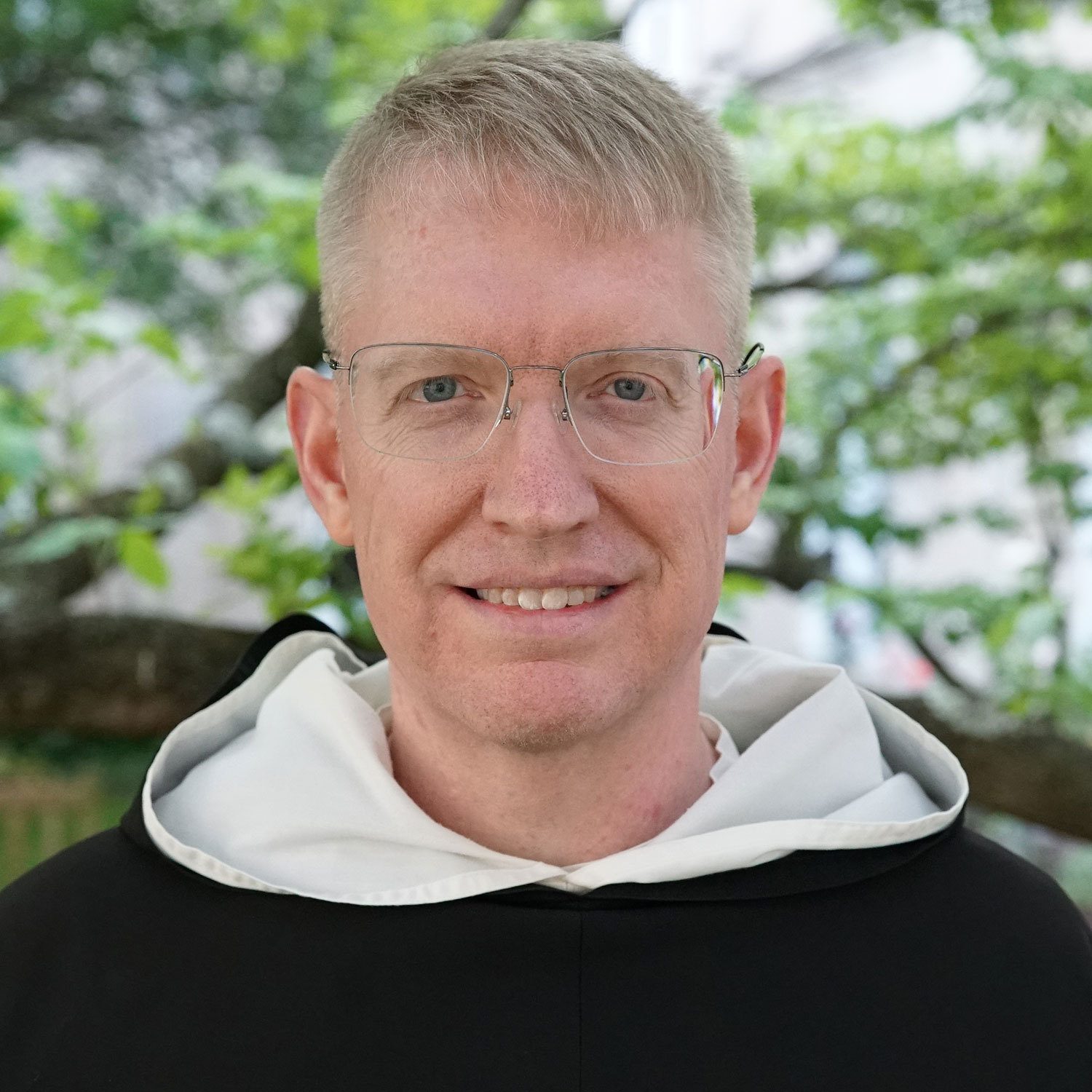
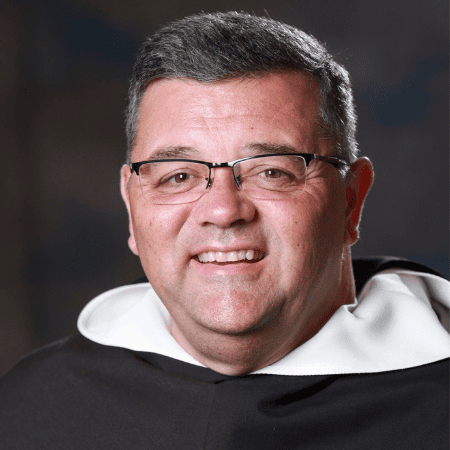
This article was originally published in the dominicanajournal.org and was written by Br. Roland Wakefield, O.P..

Written by Dominican Friars · Categorized: Uncategorized

Jun 17 2024

Little Devotion, Large Graces

Further, our Order observes more spiritual exercises in honor of the Blessed Virgin than many other Orders . . . the daily Office begins with her and ends with her, hence her Compline is said last . . . again her daily Office is always and everywhere said standing, while in the other Offices the brothers are sometimes seated.

Bl. Humbert of Romans, Commentary of the Constitutions of the Order of Preachers

When I was in college, I began praying the Divine Office (also called the Liturgy of the Hours), a tremendous devotion that helped me discover my vocation to be a friar. But when I opened a breviary for the first time, it was certainly intimidating. The amount of page-flips were so numerous that I was left dizzied. I had no idea where the psalms were, or how to pray with them, and it was discouraging to pray because of how confused I was. However, once I had a grasp on the layout of the breviary, I was much more comfortable with praying it. But a new problem arose once I was out of college: I had no time to pray the entirety of the Divine Office. Thankfully, that Christmas I was gifted with a wonderful devotional, the Little Office of the Blessed Virgin Mary.

The Little Office of the Blessed Virgin Mary is a devotional that resembles the Liturgy of the Hours. However, it is much more abbreviated and focuses more on the Blessed Mother, with the psalms, antiphons, and hymns taken from the Common of the Blessed Virgin Mary in the larger Divine Office.

The Little Office of the Blessed Virgin Mary has a long history. It is unclear when exactly it was devised, but tradition has it that, in 1095, Pope Urban II made this small office required for all clergy, in addition to their requirement to pray the Divine Office. Later, it was inserted into the back of breviaries for religious orders and clerics. This included those of the Dominican Order, and if you look in the back of the Dominican Breviary you’ll find it there. The obligation was then lifted by Pope Pius V at the Council of Trent. Most recently, the Second Vatican Council reaffirmed this devotion as a public prayer of the Church by stating “They, too, perform the public prayer of the Church who . . . recite any short office, provided this is drawn up after the pattern of the divine office and is duly approved.” To look at what brothers have said in the past about the Little Office, I encourage you to check out Fr. John Sica’s article.

You will find the Little Office much simpler to pray and much less intimidating. As opposed to the current four-week psalter of the Divine Office, the Little Office has either a daily psalter or a one-week psalter depending on the edition you pray with. This translates into much less page-flipping between sections of the book and allows it to be read straight through. 

In my own experience, Mary gives us many graces through praying her psalter. There are even indulgences attached to pious recitation of the Little Office. It is a simple way for the psalms to enter your life in a way that makes them accessible. The psalms are not meant just for priests and religious to pray, but also for the laity. This is a gift of Holy Mother Church, and one that can bring about some incredible graces.


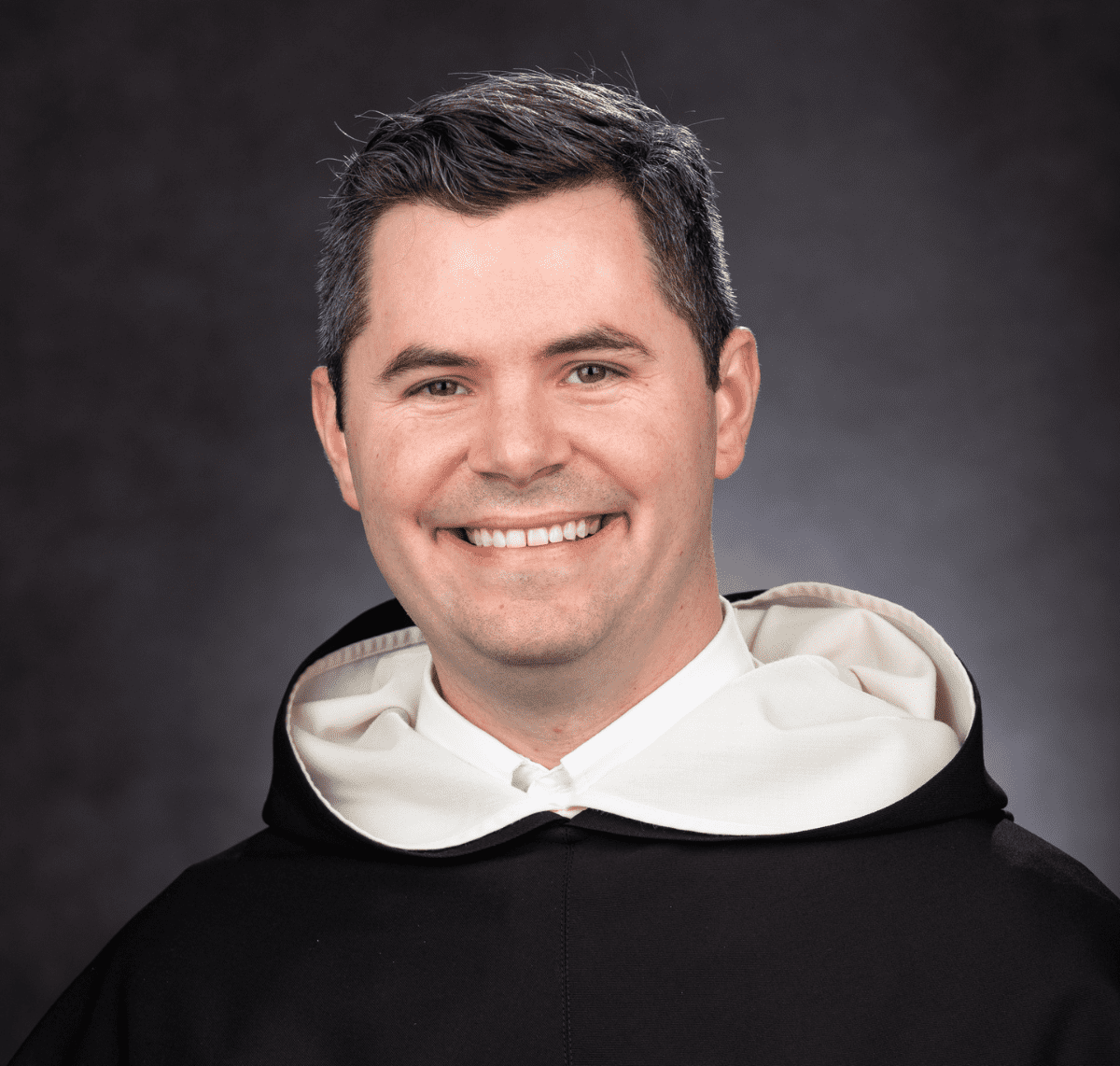
This article was originally published in the dominicanajournal.org and was written by Br. Jerome Masters, O.P..

Written by Dominican Friars · Categorized: Uncategorized · Tagged: Dominican Friars, PRAYER, the Divine Office, The Little Office of the Blessed Virgin Mary

May 27 2024

The Luminous Mysteries

Throughout his extensive pontificate, Pope Saint John Paul II held a deep devotion to the Blessed Virgin Mary and the Most Holy Rosary. In 2002, he introduced the Luminous Mysteries to the rosary, explaining their significance in his apostolic letter, “Rosarium Virginis Mariae.” ”Moving on from the infancy and the hidden life in Nazareth to the public life of Jesus, our contemplation brings us to those mysteries which may be called in a special way “mysteries of light”. Certainly the whole mystery of Christ is a mystery of light. He is the “light of the world” (Jn 8:12). Yet this truth emerges in a special way during the years of his public life, when he proclaims the Gospel of the Kingdom. In proposing to the Christian community five significant moments – “luminous” mysteries – during this phase of Christ’s life, I think that the following can be fittingly singled out: (1) his Baptism in the Jordan, (2) his self-manifestation at the wedding of Cana, (3) his proclamation of the Kingdom of God, with his call to conversion, (4) his Transfiguration, and finally, (5) his institution of the Eucharist, as the sacramental expression of the Paschal Mystery.”

The Apostolic Letter of St. Pope John Paul II entitled Rosarium Virginis Mariae.

The Luminous Mysteries

1. baptism

First Luminous Mystery: The Baptism of the Lord
“In Those Days Came John The Baptist, Preaching In The Wilderness Of Judea, ‘Repent, For The Kingdom Of Heaven Is At Hand.’” Matthew 3:1-2

2. wedding1 1

Second Luminous Mystery: The Wedding Feast At Cana
“There Was A Marriage At Cana Of Galilee, And The Mother Of Jesus Was There; Jesus Also Was Invited With His Disciples.” John 2:1-2

3. nativity

Third Luminous Mystery: The Preaching Of The Kingdom Of God
“Crowds, [Jesus] Went Up On The Mountain, And When He Sat Down His Disciples Came To Him. And He Opened His Mouth And Taught Them.” Mathhew 5:1-2

3. gospel

Fourth Luminous Mystery: The Transfiguration
“Peter And James And John, And Led Them Up A High Mountain Apart By Themselves.” Mark 9:2

5. institution of the eucharist

Fifth Luminous Mystery: The Institution Of The Most Holy Eucharist
“Disciples Had Prepared The Passover, When The Hour Came, Jesus Sat At Table And The Apostles With Him. And He Said To Them: ‘I Have Earnestly Desired To Eat This Passover With You Before I Suffer; For I Tell You I Shall Not Eat It Until It Is Fulfilled In The Kingdom Of God.’” Luke 22:14-16

We Invite You to Pray the Joyful Mysteries with Us

Written by Dominican Friars · Categorized: Uncategorized · Tagged: Rosary

Apr 29 2024

In the Eucharistic Feast

For 39 days, we have been rejoicing in the glory of the Resurrection, recalling the wonder of the apostles in those weeks after the first Easter. Then Jesus ascends to the Father, fulfilling his mission on earth and preparing his disciples for the coming of the Holy Spirit. The hymn Alleluia, Sing to Jesus! captures the mystery of the Ascension in its cosmic dimension, while also reminding the faithful of Christ’s promise to remain always with us:

Though the cloud from sight received him
when the forty days were o’er
shall our hearts forget his promise?
‘I am with you ever more.’

One cannot help but think that, on a natural level, the apostles must have been filled with sorrow at our Lord’s “departure.” On the one hand, it would seem that the Ascension should not have been a surprise to them, since Jesus spoke of returning to the Father in the Last Supper discourse (John 14–17). Additionally, he told Mary Magdalene not to cling to him, since he had “not yet ascended to the Father” (John 20:17). Nevertheless, before Jesus’ final commission, the apostles still “doubted” (Matt. 28:17). When he finally ascends to the Father, we notice that the apostles “were looking intently at the sky” (Acts 1:10), as if to catch one last glimpse of him with their physical sight. Yet, didn’t Jesus promise, “I am with you always, until the end of the age” (Matt 28:20)? What was it that caused the apostles such uncertainty or doubt regarding our Lord’s promise?

One can be tempted to fall into sadness, uncertainty, or even doubt, when considering that we are not able to see Jesus face-to-face in this life. Our hymn should offer us great comfort though, for a later verse reminds us of the fulfillment of Jesus’ promise to remain with us forever:

Here on earth both priest and victim
in the Eucharistic feast.

In the Eucharist, we share in the sacrifice Christ offered for our salvation. We receive the fruits of this saving action by sharing in the sacrament of his body and blood. In the Eucharist, Jesus is truly present in our midst, under the sacramental species of bread and wine. He is not distant or remote, nor is he with us in a mere symbol. Rather, Jesus is truly present, waiting to be received and adored, offering himself continually out of his infinite love for us. His very flesh, born of the Virgin Mary, is given to us in order to nourish and refresh our spirits. By sharing his very life with us in the Eucharist, Jesus also gives us, in the words of St. Thomas Aquinas, “a pledge of future glory.”

This pledge of future glory in the Eucharist reminds us that Jesus does not abandon us. We need not go any further than the nearest tabernacle to experience the fulfillment of his promise to remain with us always. His Ascension into heaven, rather than being some sort of loss or departure, allows Jesus to be present at all times and in all places as he brings “his humanity into divine glory” (CCC 659). So that we may always be united with his risen, glorified body in heaven, Jesus leaves his body with us sacramentally in the most holy Eucharist. In this lasting, sacramental presence of Jesus, he entrusts himself to his Church as a reminder of his love and salvation. Feeding us with his body and blood, Jesus sustains us as we journey toward the hope of glory that awaits us in heaven—eternal life with the Blessed Trinity.


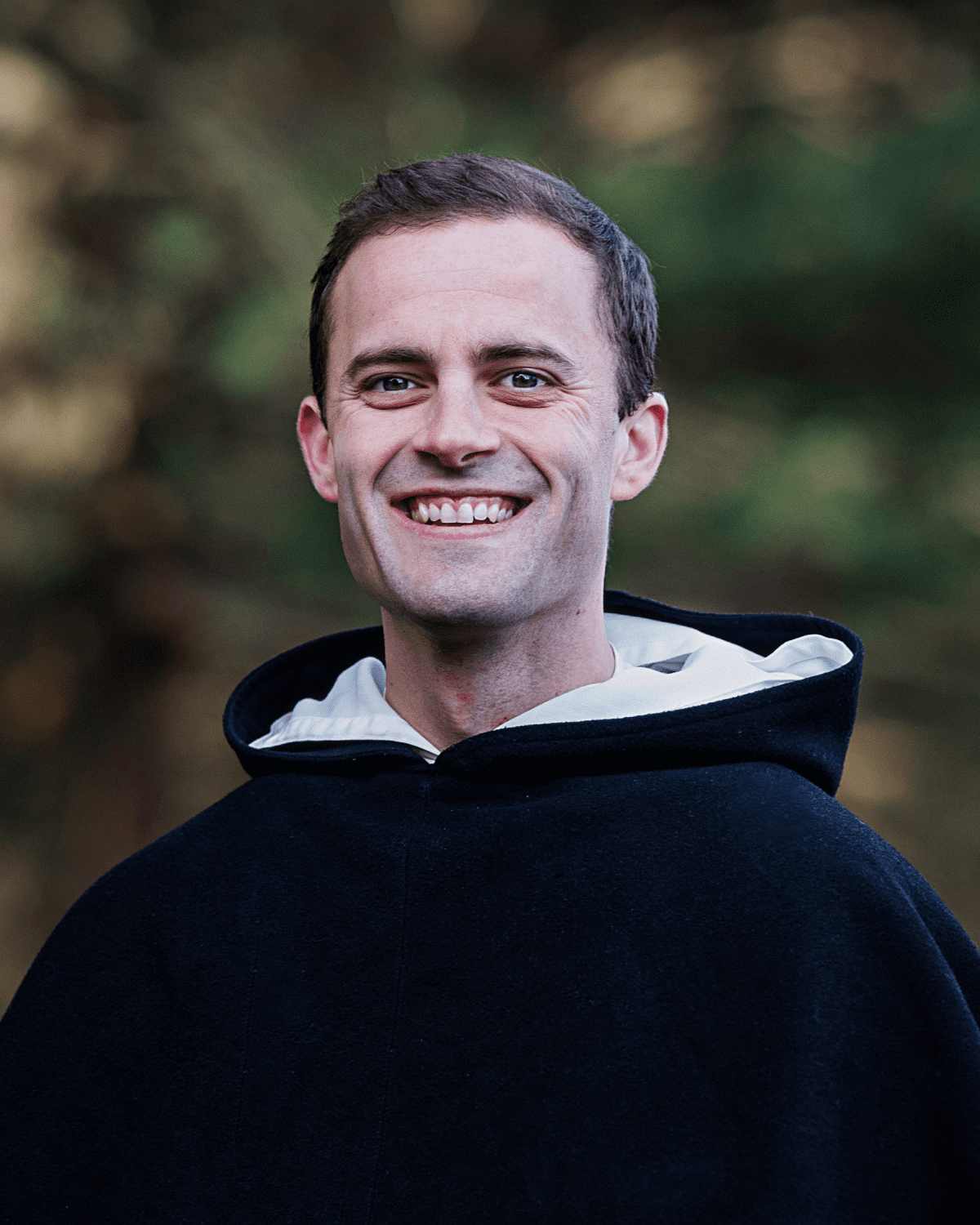
This article was originally published in the dominicanajournal.org and was written by Fr. Paul Marich, O.P..

Written by Dominican Friars · Categorized: Uncategorized · Tagged: Dominican Friars, Eucharist, PRAYER

Apr 22 2024

The Joyful Mysteries

The first part of the Rosary contains five mysteries: the first, the Annunciation of the archangel Gabriel to our Lady; the second the Visitation of our Lady to Saint Elizabeth; the third, the Nativity of Jesus Christ; the fourth, the Presentation of the Child Jesus in the Temple and the purification of the Blessed Virgin; the fifth, the Finding of Jesus in the Temple among the doctors. These are called the Joyful Mysteries because of the joy which they gave to the whole universe. Our Lady and the angels were overwhelmed with joy the moment the Son of God became incarnate. Saint Elizabeth and St. John the Baptist were filled with joy by the visit of Jesus and Mary. Heaven and earth rejoiced at the birth of the Saviour. Holy Simeon felt great consolation and was filled with joy when he took the holy child into his arms. The doctors were lost in admiration and wonderment at the replies which Jesus gave; and who could express the joy of Mary and Joseph when they found Jesus after three days’ absence?

The above is an excerpt from The Secret of the Rosary by St. Louis de Montfort.

The Joyful Mysteries

1. annunciation

First Joyful Mystery: The Annunciation
“Behold, you will conceive in your womb and bear a son, and you shall call his name Jesus.” Luke 1:31

2. visitation

Second Joyful Mystery: The Visitation
When Elizabeth heard the greeting of Mary, the babe leaped in her womb; and Elizabeth was filled with the Holy Spirit. Luke 1:41

3. nativity

Third Joyful Mystery: Nativity of Jesus Christ
[Mary] gave birth to her first-born son and wrapped him in swaddling cloths, and laid him in a manger, because there was no place for them in the inn. Luke 2:7

4. presentation

Fourth Joyful Mystery: Presentation in the Temple
When the time came for their purification according to the law of Moses, they brought [Jesus] up to Jerusalem to present him to the Lord. Luke 2:22

5. finding jesus

Fifth Joyful Mystery: Finding in the Temple
“How is it that you sought me? Did you not know that I must be in my Father’s house?” Luke 2:49

We Invite You to Pray the Joyful Mysteries with Us

Written by Dominican Friars · Categorized: Uncategorized · Tagged: Rosary

  • « Go to Previous Page
  • Page 1
  • Interim pages omitted …
  • Page 10
  • Page 11
  • Page 12
  • Page 13
  • Page 14
  • Interim pages omitted …
  • Page 23
  • Go to Next Page »

Contact Us:

Dominican Rosary Pilgrimage
141 East 65th Street
New York, NY 10065

Tel: (212) 744-2410
info@rosarypilgrimage.org

Media Inquiries: Kevin Wandra
Tel: (404) 788-1276
KWandra@
CarmelCommunications.com
PRESS RESOURCES
The Dominican Rosary Pilgrimage is hosted by the Dominican Friars of the Province of St. Joseph at the Basilica of the National Shrine of the Immaculate Conception and promotes the Confraternity of the Most Holy Rosary.

This event is supported by the Dominican Foundation of Dominican Friars Province of St. Joseph, Inc. a NY State tax-exempt corporation under section 501(c) (3) of the Internal Revenue Code, with tax ID # 26-3273636.

Privacy Policy | Copyright ©2026 Dominican Rosary Pilgrimage
Designed by Fuzati

Primary Logo Color

"*" indicates required fields

¿Planea asistir a la Peregrinación en persona?*
Ingrese un número del 0 al 2000.

Primary Logo Color

"*" indicates required fields

Are you planning to attend the Pilgrimage in person?*
Are you a member of your parish or ministry's leadership team?*
Please enter a number from 0 to 2000.