• Skip to main content
SIGN UP
  • News
  • FAQ
  • 2025 Replay
  • Shop
  • Donate
SIGN UP

Dominican Rosary Pilgrimage

A National Pilgrimage Devoted to Christ and Our Lady

  • News
  • FAQ
  • 2025 Replay
  • Shop
  • Donate

Dominican Friars

Dec 15 2022

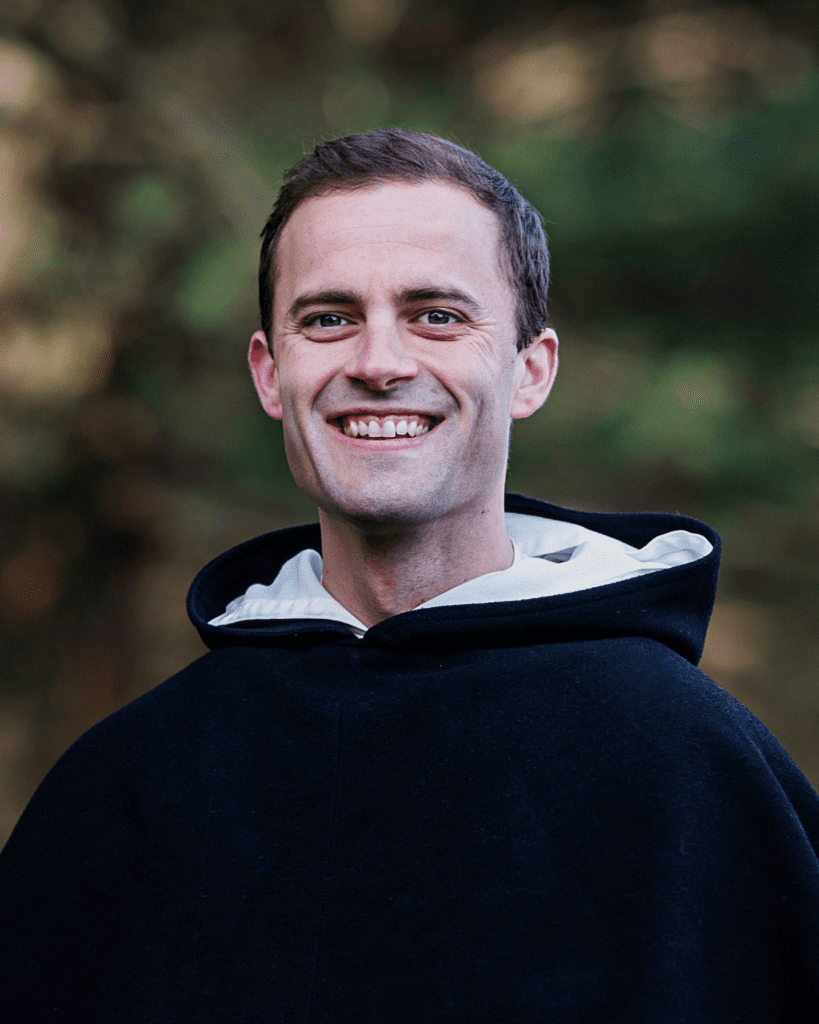
The Best Prayer for Men

By Fr. Patrick Mary Briscoe, O.P.

A version of this article appeared in the online journal, Dominicana.

Growing up, I’d occasionally catch my father as he finished praying the Rosary early on Saturday mornings or notice he’d left his handsome set of beads lying out on a coffee table. I had the blessing of his example. Other men know their fathers have placed a Rosary in their locker at work (try and find a Catholic firefighter who doesn’t have either a Rosary or a saint’s medal) or even just keep one in their pocket, where from time to time they’ll pause and touch the beads. But for those men who haven’t “seen” or “heard,” how do we make sense of the Rosary as a manly devotion?

1. The Rosary is covert. A fierce point of intimidation of being a man of faith in our culture is the fear that we will amount to being hypocrites (and we know how much Jesus loved that…). In the face of our own weakness, we want to be authentic about who we are, what we’re capable of, and what we believe. Rather than broadcasting or projecting a false image of ourselves as mighty saints, men prefer to keep things on the down low. The problem is this principle of authenticity—which is truly noble—can be our undoing. When we’re not grounded in something solid, we’ll drift away. We’re not all called to some kind of grandiose witness, like martyrdom or preaching, but we do need to be faithful. The Rosary offers a structured program for building up the foundation of faith in our souls in secret, so that when the storms come our hearts will be strong enough to be true.

2. The Rosary arms us for spiritual warfare. The fact of the matter is that spiritual life is war. St. Paul puts it this way, “For we are not contending against flesh and blood, but against the principalities, against the powers, against the world rulers of this present darkness, against the spiritual hosts of wickedness in the heavenly places” (Eph. 6:12). To contend in the battle, we must put on the armor of Light (Rom. 13:12)! Dominican friars wear the Rosary on the left side, the side which bore the sword for knights of old. In the battle of the spiritual life, prayer is the only weapon, and it must be used. Frequently. Unceasingly. Devotion to the Rosary reclaimed the life of the 19th-century Italian lawyer Bartolo Longo (who had become entrapped in the world of the occult and often dreamt of taking his own life), and without a doubt, devotion to the Rosary will help us overcome the evils which plague us. The temptations and cycles of sin of the 21st century do not own us, for the Rosary narrates the greatest conquest of all time: the victory of life and light over sin and death.

3. The Rosary sanctifies our contemplative side. Like fixing things around the house, solving crises at work or otherwise designing and building, men love to muse over problems. I’ve heard it said before that during time set aside for prayer people should clear their minds, so that they can be totally focused on God. That seems unnatural to me. It’s been my experience that God wants us to set before Him the mess and mud of our lives, not hide it from Him. This is the very glory of Christianity—the Incarnational principle—that God would condescend to our world and sanctify it, lift it up to Him. The mysteries of the Rosary lead us to think and reflect on the stuff of our lives, while simultaneously giving us an opportunity to hand our struggles over to the Lord. When we reflect on the mysteries of the Rosary, we join our lives to Christ’s. By praying the Rosary, God pierces the hardened shell of our hearts and opens up a place for Him. He will speak to us, to the problems of our own lives, through the Rosary.

4. Jesus says so. Ever since second-grade religion class, Jesus is usually the right answer. Without getting all theological, we can simply say: men should pray the Rosary because He told us to. From the Cross Jesus tells St. John, “Behold your Mother!” (Jn. 19:27). That command to “behold” is not St. John’s alone—it’s ours, too. To behold, to take in, to bask in, to be attentive to, to delight in: this is the command. Through Mary’s intercession at the Cross and in the Rosary, Jesus arranges that the treasury of graces associated with His Immaculate Mother may be opened to us and poured out on us. But we’re left to seek her, to behold her.

Written by Dominican Friars · Categorized: Uncategorized · Tagged: DEVOTION, Dominican Friars, FR. PATRICK MARY BRISCOE, MEN, Order of Preachers, PRAYER, Rosary

Dec 15 2022

God Never Lets Us Go

24232125666 333975aabc o 300x300 1

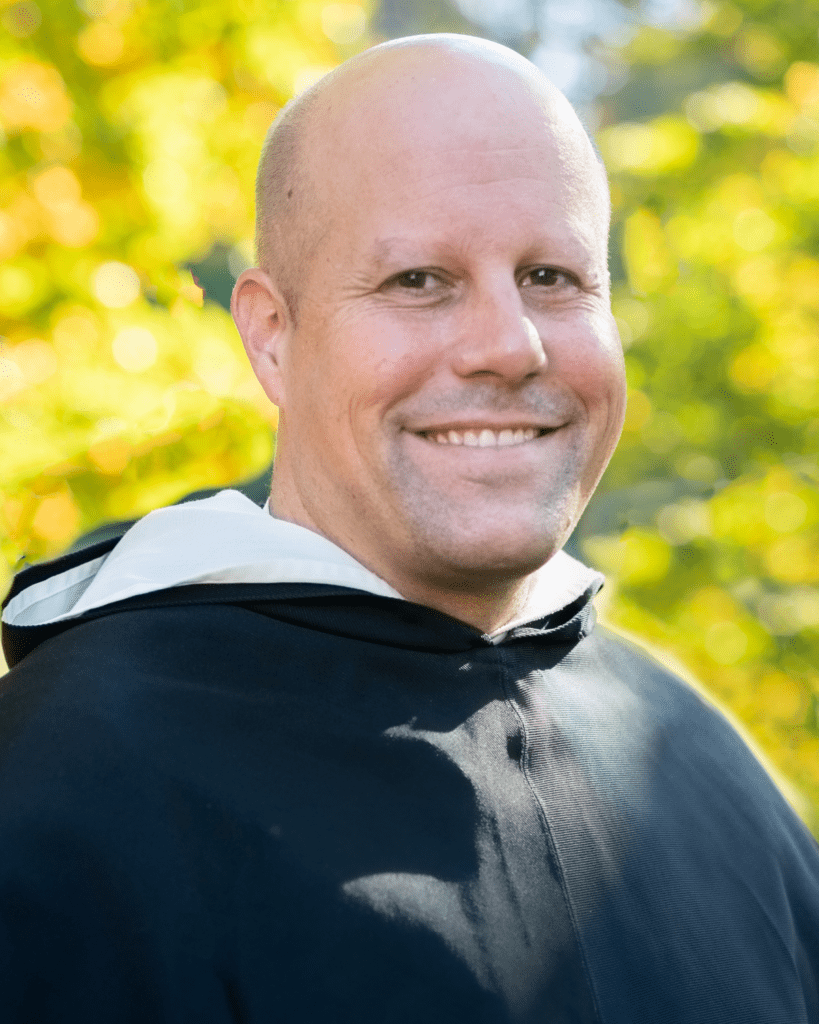
By Father Pius Pietrzyk, O.P.

On May 23rd, 2008, I was ordained a priest of Jesus Christ. I like to think that my Nana—my Irish grandmother—is having a great laugh right now. She always hoped that I would become a priest. I thought about it a great deal when I was in high school. I even decided I would become a priest, in that half-hearted way teenagers make any long-term decision. But like so many young people, the lure of ambition and the prestige of the world pulled me away from the Church. A career in the law became my goal, and God took a back seat, and I was content to keep Him there.

But, try as we might, God never lets us go. “Where can I hide from your spirit? From your presence, where can I flee? … If I fly with the wings of dawn and alight beyond the sea, even there your hand will guide me, your right hand hold me fast” (Psalm 139). I think the same can be said of grandmothers.

It was a great sadness to me when my Nana died. It was April 30th, weeks before my college graduation—and I was to be the first of her grandchildren to graduate from college. But she left me something very valuable; she left me her Rosary. It was not valuable in the way the world measures value, but only so in the way a grandson values the keepsake of a dearly missed grandparent.

It was valuable in another way, too. That Rosary was priceless in that it was like a cord passed from God through my Nana’s hands to me. Years later, after I did graduate from law school, as I began to embark on a promising career in a prestigious Chicago law firm, I discovered that Rosary again. But this time, I began to pray it.

As I did, God gave a firm tug on that cord, and slowly brought me back to Him. It was in that time of prayer that I discovered that as happy as I was being a lawyer, the Lord wanted for me an even greater happiness. And so, at the dawn of my career, I left all the things the world told me were valuable, to serve God in his Church.

While all of this is ultimately attributable to God’s grace, I think my Nana’s prayers were a part of it, too. Some time after I became a Dominican—and after I took the name ‘Pius,’ after the Dominican saint Pope Saint Pius V—I learned a surprising fact. The Church celebrates the feast day of my new patron Saint Pius on April 30th, which is the exact same day my Nana left this world. I like to think that coincidence was my Nana’s way of saying “I told you so.” So, if you were at my ordination, and you heard the echo of faint laughter, it was probably just my Nana, happy that I finally realized she was right all along.

Written by Dominican Friars · Categorized: Uncategorized · Tagged: CATHOLIC, Dominican Friars, DOMINICAN ORDER, FR. PIUS PIETRZYK, Order of Preachers, PRAYER, Rosary, ROSARY SHRINE OF SAINT JUDE

Dec 15 2022

The Rosary of the Virgin Mary

While he was the reigning pontiff, Pope St. John Paul II was known for his devotion to the Most Holy Rosary. In his apostolic letter, “Rosarium Virginis Mariae,” he writes about it’s relevance to the Christian life, and the relationship between the rosary and the Order of Preachers. What follows is an excerpt from that letter.

The Rosary of the Virgin Mary, which gradually took form in the second millennium under the guidance of the Spirit of God, is a prayer loved by countless Saints and encouraged by the Magisterium. Simple yet profound, it still remains, at the dawn of this third millennium, a prayer of great significance, destined to bring forth a harvest of holiness. It blends easily into the spiritual journey of the Christian life, which, after two thousand years, has lost none of the freshness of its beginnings and feels drawn by the Spirit of God to “set out into the deep” (duc in altum!) in order once more to proclaim, and even cry out, before the world that Jesus Christ is Lord and Saviour, “the way, and the truth and the life” (Jn 14:6), “the goal of human history and the point on which the desires of history and civilization turn.”

Rosary 1
Fr. Jordan Turano’s well thumbed rosary beads.

The Rosary, though clearly Marian in character, is at heart a Christocentric prayer. In the sobriety of its elements, it has all the depth of the Gospel message in its entirety, of which it can be said to be a compendium. It is an echo of the prayer of Mary, her perennial Magnificat for the work of the redemptive Incarnation which began in her virginal womb. With the Rosary, the Christian people sits at the school of Mary and is led to contemplate the beauty on the face of Christ and to experience the depths of his love. Through the Rosary the faithful receive abundant grace, as though from the very hands of the Mother of the Redeemer.

The Rosary is also a path of proclamation and increasing knowledge, in which the mystery of Christ is presented again and again at different levels of the Christian experience. Its form is that of a prayerful and contemplative presentation, capable of forming Christians according to the heart of Christ. When the recitation of the Rosary combines all the elements needed for an effective meditation, especially in its communal celebration in parishes and shrines, it can present a significant catechetical opportunity which pastors should use to advantage. In this way too Our Lady of the Rosary continues her work of proclaiming Christ. The history of the Rosary shows how this prayer was used in particular by the Dominicans at a difficult time for the Church due to the spread of heresy. Today we are facing new challenges. Why should we not once more have recourse to the Rosary, with the same faith as those who have gone before us? The Rosary retains all its power and continues to be a valuable pastoral resource for every good evangelizer.

Written by Dominican Friars · Categorized: Uncategorized · Tagged: Dominican Friars, Order of Preachers, Pope Saint John Paul II, Rosary, St Dominic

Dec 15 2022

Video: Luminous Mysteries of the Dominican Rosary with Saint John Paul II

We hope you enjoy this video of Pope Saint John Paul II praying the Luminous Mysteries of the Dominican Rosary in Latin! The opening footage is from the Knights of Columbus college student’s trip to World Youth Day in Poland.

Written by Dominican Friars · Categorized: Uncategorized · Tagged: CATHOLIC, Dominican Friars, POPE SAINT JOHN PAUL II ROSARY, PRAYER, Rosary, SAINT JOHN PAUL II

Dec 15 2022

A former Satanist priest who became a Saint

Bartolo Longo was born to a devout Catholic family near Brindisi, in southern Italy. He was a brilliant, though mischievous kid, who began to lose his way at the age of ten after his mother died. His adolescence was a time of great upheaval in his country, when Garabaldi was seeking to eliminate the papal city states and unite Italy. By the time Bartolo entered the University of Naples law school, many of his professors were ex-priests preaching nationalist venom against the Church. He was quickly caught up in their fervor. “I, too, grew to hate monks, priests and the Pope,” he would later write, “and in particular [I detested] the Dominicans, the most formidable, furious opponents of those great modern professors, proclaimed by the university the sons of progress, the defenders of science, the champions of every sort of freedom.”

In his confusion and emptiness, without God to turn to, he began to visit some of Naples’ infamous mediums. That was his introduction into the occult. Soon, his thirst for the supernatural led him into outright Satanism, where after a period of intense study and such rigorous fasting that he was reduced to skin and bones, he was consecrated a satanic priest and promised his soul to a demon. For the next year, he began to preside over satanic services and to preach more boldly and blasphemously against God and the Church — treating them, in a diabolical reversal, as the real evils.

His family back home tried to talk him about of the path he had chosen, to no avail. The began to pray and to ask for help from whoever might lend a hand. Professor Vincenzo Pepe, a solidly Catholic professor at the university, responded. He began to meet with Bartolo, accosting him, “Do you want to die in an insane asylum and be damned forever?” Bartolo couldn’t ignore the psychological and physiological state he was in. Professor Pepe eventually convinced him to see a Dominican priest, who after three weeks of lengthy conversations, on the feast of the Sacred Heart in 1865, was able to welcome him back into the Church and give him absolution.

To keep an eye on him, Professor Pepe allowed Bartolo to move in with him and started to surround him with faithful and dedicated Catholics. Each day for two years, as a voluntarily-imposed penance, Bartolo worked in the Neapolitan Hospital for Incurables. He prayed. He became a third-order Dominican. He made a promise of celibacy to serve God with an undivided heart. He sought to do reparation for his scandal by returning to his Satanist hangouts, holding up the Rosary and publicly renouncing his former ways.

But he still despaired. He couldn’t forgive himself or see how God could ever forgive him. One day, while fulfilling some legal business in Pompeii for his client Countess Mariana di Fusco, and seeing how great was the people’s poverty, ignorance, moral corruption and dependence on witchcraft, God helped him to see both how he could be saved and how he could spend his life saving others.

“One day in the fields around Pompeii,” he wrote, “I recalled my former condition as a priest of Satan… I thought that perhaps as the priesthood of Christ is for eternity, so also the priesthood of Satan is for eternity. So, despite my repentance, I thought: I am still consecrated to Satan, and I am still his slave and property as he awaits me in Hell. As I pondered over my condition, I experienced a deep sense of despair and almost committed suicide. Then I heard an echo in my ear of the voice of Friar Alberto repeating the words of the Blessed Virgin Mary: ‘One who propagates my Rosary shall be saved.’ Falling to my knees, I exclaimed: ‘If your words are true that he who propagates your Rosary will be saved, I shall reach salvation because I shall not leave this earth without propagating your Rosary.’”

He spent the whole rest of his life, beginning in Pompeii, propagating the Rosary and imitating the mysteries it contained. With the financial support of the Countess, he built Pompeii’s famous Basilica of Our Lady of the Most Holy Rosary, founded elementary schools and orphanages, inaugurated a print shop and technical school to give the children of convicted criminals the chance of a better life. He wrote books on the Rosary, composed novenas and prayer manuals. The former Satanist eventually became a friend of Pope Leo XIII, who had a great devotion to the Rosary. From Pompeii he also began the popular movement that led to the solemn dogmatic proclamation of the Assumption in 1950.

Perhaps his most lasting contribution of all will prove to be the Luminous Mysteries of the Rosary. It was from Blessed Bartolo’s writings that Pope John Paul II found not only the idea of mysteries covering the time of Jesus’ public ministry, but also what the individual mysteries should be and what all five as a whole should be called. When he proposed the new Mysteries of Light in his 2002 encyclical “The Rosary of the Blessed Virgin Mary,” Pope John Paul II didn’t hesitate to show his admiration for this holy man whose conversion and subsequent holy life demonstrate that no matter how far away from the faith one is, there’s always hope. After referring to Blessed Bartolo’s insights throughout his Rosary encyclical, Pope John Paul II concluded by quoting the prayer of the man he beatified in 1980.

This prayer is a fitting way for us to conclude the month of the Rosary and to pray for those who, like Blessed Bartolo once was, are still caught under the bondage of Satanism and the occult:

“O Blessed Rosary of Mary, sweet chain that unites us to God, bond of love that unites us to the angels, tower of salvation against the assaults of Hell, safe port in our universal shipwreck, we will never abandon you. You will be our comfort in the hour of death: yours our final kiss as life ebbs away. And the last word from our lips will be your sweet name, O Queen of the Rosary of Pompei, O dearest Mother, O Refuge of Sinners, O Sovereign Consoler of the Afflicted. May you be everywhere blessed, today and always, on earth and in heaven.”

Written by Dominican Friars · Categorized: Uncategorized

  • « Go to Previous Page
  • Page 1
  • Interim pages omitted …
  • Page 23
  • Page 24
  • Page 25
  • Page 26
  • Go to Next Page »

Contact Us:

Dominican Rosary Pilgrimage
141 East 65th Street
New York, NY 10065

Tel: (212) 744-2410
info@rosarypilgrimage.org

Media Inquiries: Kevin Wandra
Tel: (404) 788-1276
KWandra@
CarmelCommunications.com
PRESS RESOURCES
The Dominican Rosary Pilgrimage is hosted by the Dominican Friars of the Province of St. Joseph at the Basilica of the National Shrine of the Immaculate Conception and promotes the Confraternity of the Most Holy Rosary.

This event is supported by the Dominican Foundation of Dominican Friars Province of St. Joseph, Inc. a NY State tax-exempt corporation under section 501(c) (3) of the Internal Revenue Code, with tax ID # 26-3273636.

Privacy Policy | Copyright ©2026 Dominican Rosary Pilgrimage
Designed by Fuzati

Primary Logo Color

"*" indicates required fields

¿Planea asistir a la Peregrinación en persona?*
Ingrese un número del 0 al 2000.

Primary Logo Color

"*" indicates required fields

Are you planning to attend the Pilgrimage in person?*
Are you a member of your parish or ministry's leadership team?*
Please enter a number from 0 to 2000.